

Branding for NRI-Owned Businesses: Kerala Design Sensibility, GCC Markets
NRI-owned businesses in the Gulf often get generic branding. Here's how Kerala's design sensibility can build a brand that feels authentic in both markets.
Walk through any commercial street in Dubai, Doha, or Riyadh and you'll spot them — restaurants, grocery stores, salons, trading companies — owned by Malayali entrepreneurs who've built genuinely successful businesses in the Gulf. And yet, a surprising number of these businesses look and feel indistinguishable from every other small business around them: a stock logo, a generic colour palette, a website template that could belong to anyone.
This isn't a lack of ambition. It's a branding gap. Many NRI-owned businesses either skip branding entirely and lean on word-of-mouth, or they hire whoever's cheapest and fastest, without anyone actually asking the harder question: what does this brand need to say, and to whom?
That question matters more for NRI-owned businesses than almost any other category, because these businesses are almost always speaking to two audiences at once — a Gulf customer base that expects polish and professionalism, and a Malayali community that responds to something that feels rooted, familiar, and trustworthy. Getting the branding right means holding both of those at the same time, not choosing one over the other.
The Branding Problem Unique to NRI-Owned Businesses
A branding project for a purely local Gulf business, or a purely local Kerala business, has one clear cultural reference point to work from. NRI-owned businesses don't have that luxury — and treating the brand like it does is where most of the disconnect starts.
Consider a Malayali-owned restaurant in Abu Dhabi. If the branding leans too heavily into generic "ethnic restaurant" visual cliques — the kind of stock imagery and clip-art aesthetic that shows up on a thousand identical menus — it undersells the food and the story behind it. But if the branding strips out every cultural marker to look purely "international," it loses the very thing that makes it distinctive in a market full of interchangeable options: an authentic, specific identity that a Gulf customer can't get anywhere else, and that a homesick Malayali customer immediately recognises and trusts.
The businesses that get this right aren't choosing between "traditional" and "modern." They're finding a visual and verbal identity that's specific and confident enough to read as premium in the Gulf market, while carrying design details, colour sensibilities, and tone that feel genuinely Kerala — not performed, not stereotyped, just true to where the business actually comes from.
What "Kerala Design Sensibility" Actually Means in Practice
This phrase gets used loosely, so it's worth being specific about what it means in a branding context — because it's not about literally putting a coconut tree or a mural of backwaters on every logo.
Kerala's design sensibility, at its best, tends to favour a few consistent qualities: restraint over excess, strong use of natural and earthy colour tones, typography and layout choices that feel calm rather than loud, and an underlying warmth — a sense of hospitality — that comes through in how a brand communicates, not just how it looks. It's the same instinct that shows up in Kerala's architecture, its houseboats, its traditional interiors: understated, deliberate, confident without needing to shout.
Translated into a brand identity, this can look like:
A colour palette drawn from Kerala's natural tones — deep greens, warm ochres, muted golds — used with restraint rather than as decoration. Typography choices that feel calm and premium rather than busy or over-designed, echoing the understated confidence found in well-designed Kerala interiors and print work. Photography and imagery direction that favours authenticity over stock-photo polish — real spaces, real textures, real people, rather than generic international stock photography that could belong to any business anywhere. A tone of voice in copywriting that carries warmth and hospitality without tipping into the over-familiar or the overly formal — the same balance a good host strikes.
None of this requires literal cultural symbolism. It requires a design team that actually understands the sensibility well enough to translate it into modern, GCC-appropriate branding, rather than either ignoring it or reducing it to cliché.
Why This Matters More for Trust Than for Aesthetics
It's tempting to treat this as a purely aesthetic argument — that better-looking branding is simply nicer to look at. But for NRI-owned businesses specifically, branding does real, measurable work on trust.
A Gulf customer evaluating an unfamiliar business — whether it's a restaurant, a trading company, or a services business — reads visual polish as a signal of reliability. Generic, dated, or inconsistent branding creates hesitation before a customer has even walked in the door or opened the website. This is especially true for businesses competing against larger, more established international chains, where a strong, specific brand identity is often the only real differentiator a small or mid-sized business has.
At the same time, the Malayali community in the Gulf — which is often a meaningful share of the customer base for many NRI-owned businesses — responds strongly to authenticity. A brand that feels genuinely connected to Kerala, rather than a copy of something generic, builds a kind of loyalty that pure aesthetics alone can't produce. It signals "we understand you" in a market where that understanding is genuinely rare.
Where Branding Actually Shows Up (Beyond the Logo)
A common misconception is that branding means a logo and maybe a colour scheme. In practice, a coherent brand identity touches almost every customer-facing surface a business has, and inconsistency across these surfaces is one of the most common (and easily fixable) problems we see in NRI-owned businesses:
Logo and visual identity system — not just the mark itself, but how it's used consistently across signage, packaging, and digital. Website design — often the first serious impression a new customer forms, and one of the most common places where branding either reinforces or completely undermines the physical business. Social media presence — Instagram and Facebook, in particular, are where most Gulf-based Malayali businesses actually get discovered, and inconsistent visual identity here directly costs recognisability. Physical signage and interiors — for restaurants, salons, and retail specifically, the in-person experience needs to match the digital one, or the brand feels disjointed. Packaging and print materials — menus, business cards, delivery packaging — small details that compound into a customer's overall sense of how serious and professional the business is. Businesses that treat these as separate, disconnected tasks — a friend designs the logo, a different freelancer builds the website, a third person handles Instagram — almost always end up with a fragmented identity that doesn't reinforce itself anywhere. A coordinated approach, where one team owns the full brand identity across every surface, is what actually produces the "I've seen this brand before and I trust it" recognition effect that drives repeat customers.
Bringing Branding and the Website Together
For most NRI-owned businesses, the website is where the brand identity either comes together or falls apart — because it's the one surface that has to carry the full visual system at once: logo, colour, typography, photography, and tone of voice, working together in a single experience.
This is exactly why branding and web design shouldn't be handled as two separate, disconnected projects. A brand identity built without the website in mind often doesn't translate well once it's actually built — colours that work in a logo look wrong as a full site palette, typography that reads well in print doesn't always perform on mobile. When the same team handles both, from brand strategy and identity through to the actual website build, the result is a brand that feels intentional everywhere a customer encounters it, not just on the parts someone happened to think through carefully.
If your business's branding currently feels scattered across your logo, your website, and your Instagram, that disconnect is costing you recognition every day it stays unresolved. Get in touch and we'll walk you through what a coordinated brand identity would actually look like for your business.
A Practical Starting Point for NRI Business Owners
If you're an NRI business owner in the Gulf weighing whether a proper branding investment is worth it right now, a few practical signs suggest it's time:
You've grown mostly through word-of-mouth and referrals, and you're now trying to reach customers who don't already know you. Your logo, website, and social media all look like they belong to different businesses. You're competing directly against larger, more polished chains or franchises in your category. You're planning to open a second location or expand into a new GCC market, and want consistency as you scale. Your current visual identity was designed years ago, quickly, or by someone without design experience, and it shows.
Any one of these is a reasonable trigger to invest properly, rather than continuing to patch things together piecemeal. If cost is the main hesitation, it's worth reading our breakdown of what ecommerce website development actually costs for GCC sellers building from Kerala — the same cost logic (Kerala-based delivery at a fraction of Gulf agency rates, without cutting quality) applies to branding work as well.
Working With a Kerala-Based Branding Team From the Gulf
If you're evaluating whether to work with a Kerala-based branding and design team remotely, the same due-diligence questions apply here as they do for any project managed from abroad — clear process, a defined point of contact, and milestone-based delivery, not a single big reveal at the end. Our guide on choosing a reliable web development partner in Kerala from the Gulf covers exactly what to check before you commit, and it applies just as directly to branding and design engagements.
At CODO AI Innovations, branding work runs through the same structured process as our development projects — strategy and identity first, then applied consistently across web, social, and print, with a single team accountable for how it all fits together. We work with NRI-owned businesses across the GCC regularly, which means we already understand the balance this article has been getting at: professional enough for a Gulf market, authentic enough to feel like home.
Frequently Asked Questions
Keep Reading
View All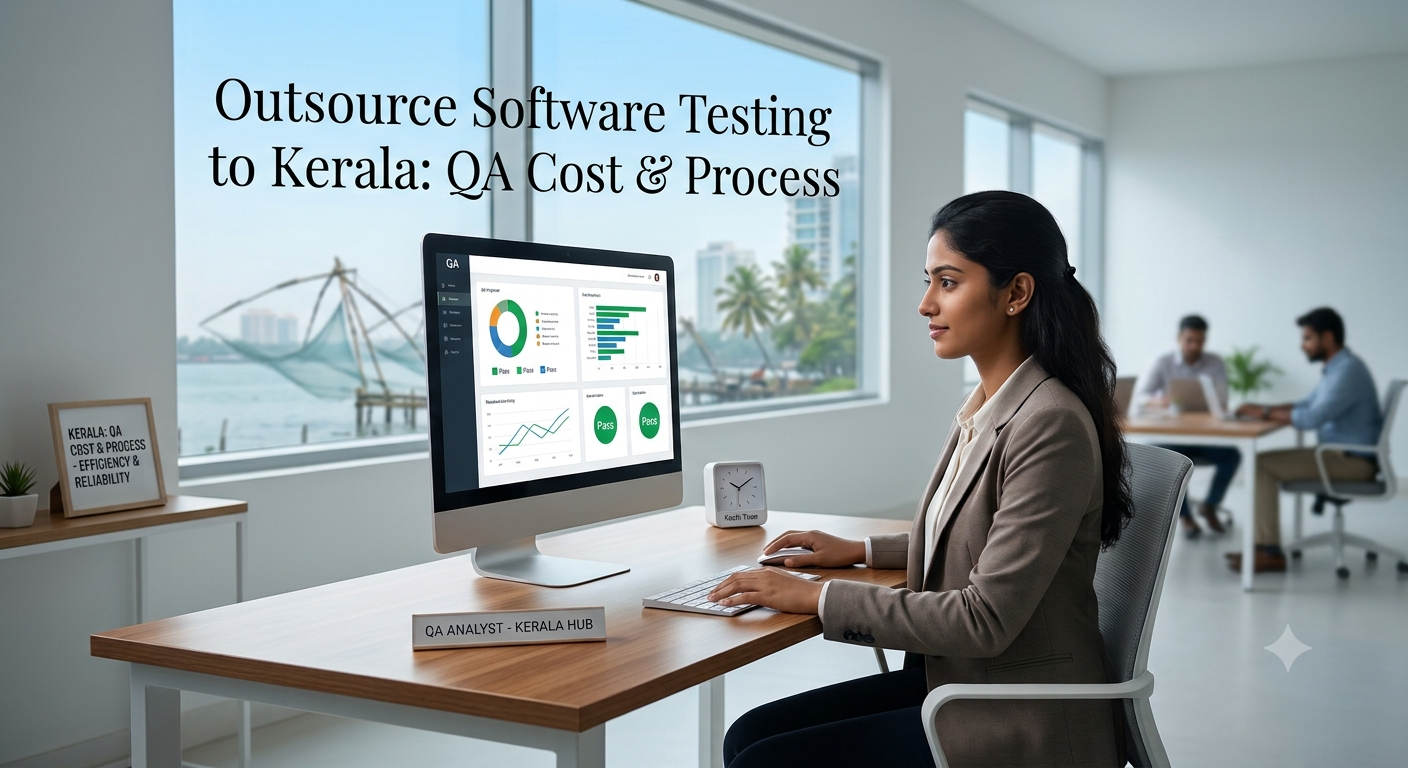
Outsource Software Testing to Kerala: QA Cost & Process
Planning to outsource QA? See what manual and automation testing cost in Kerala, how the process works, and which questions to ask vendors before you sign.
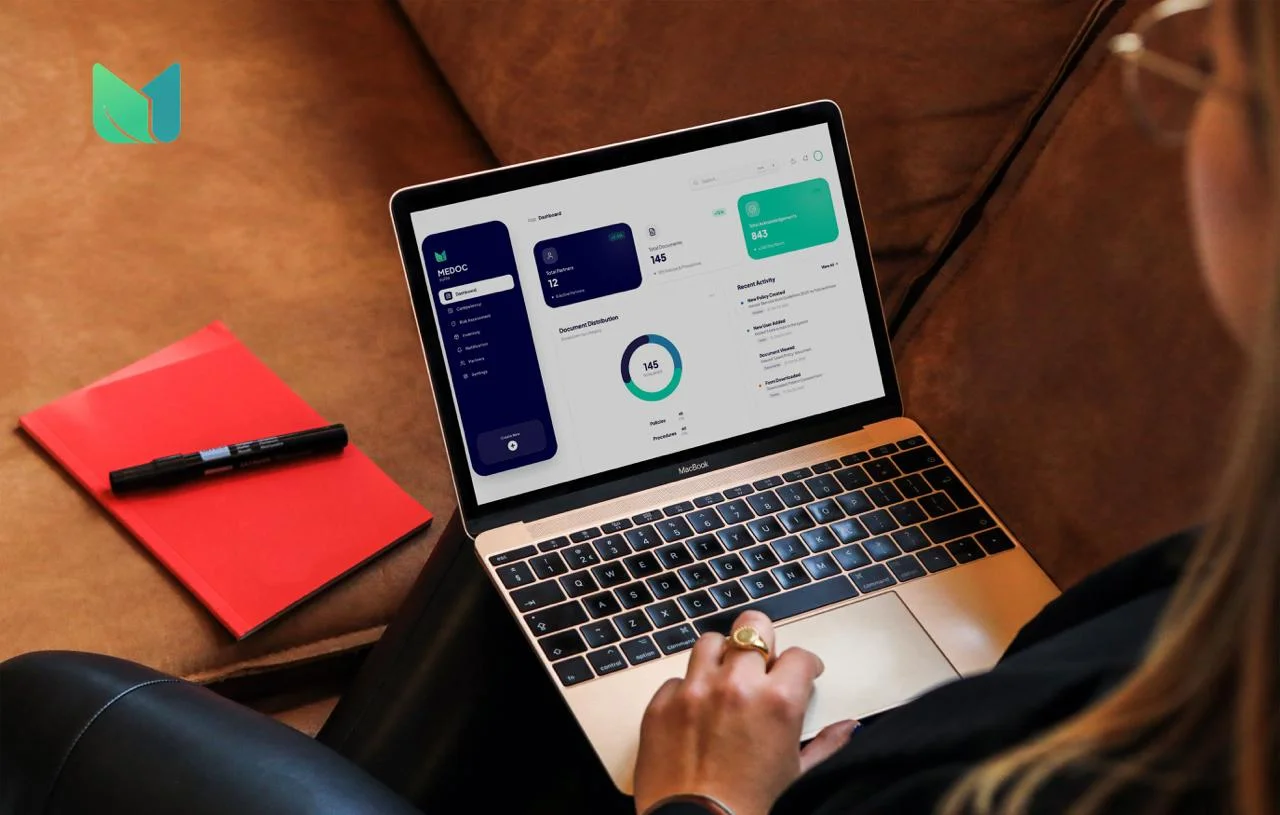
Case Study: Medoc Suite Platform by CODO AI
Scattered records, tricky scheduling and slow billing cost healthcare teams hours every week. See how CODO AI approached Medoc Suite, from discovery to launch, and what a single healthcare platform can change for your clinic.
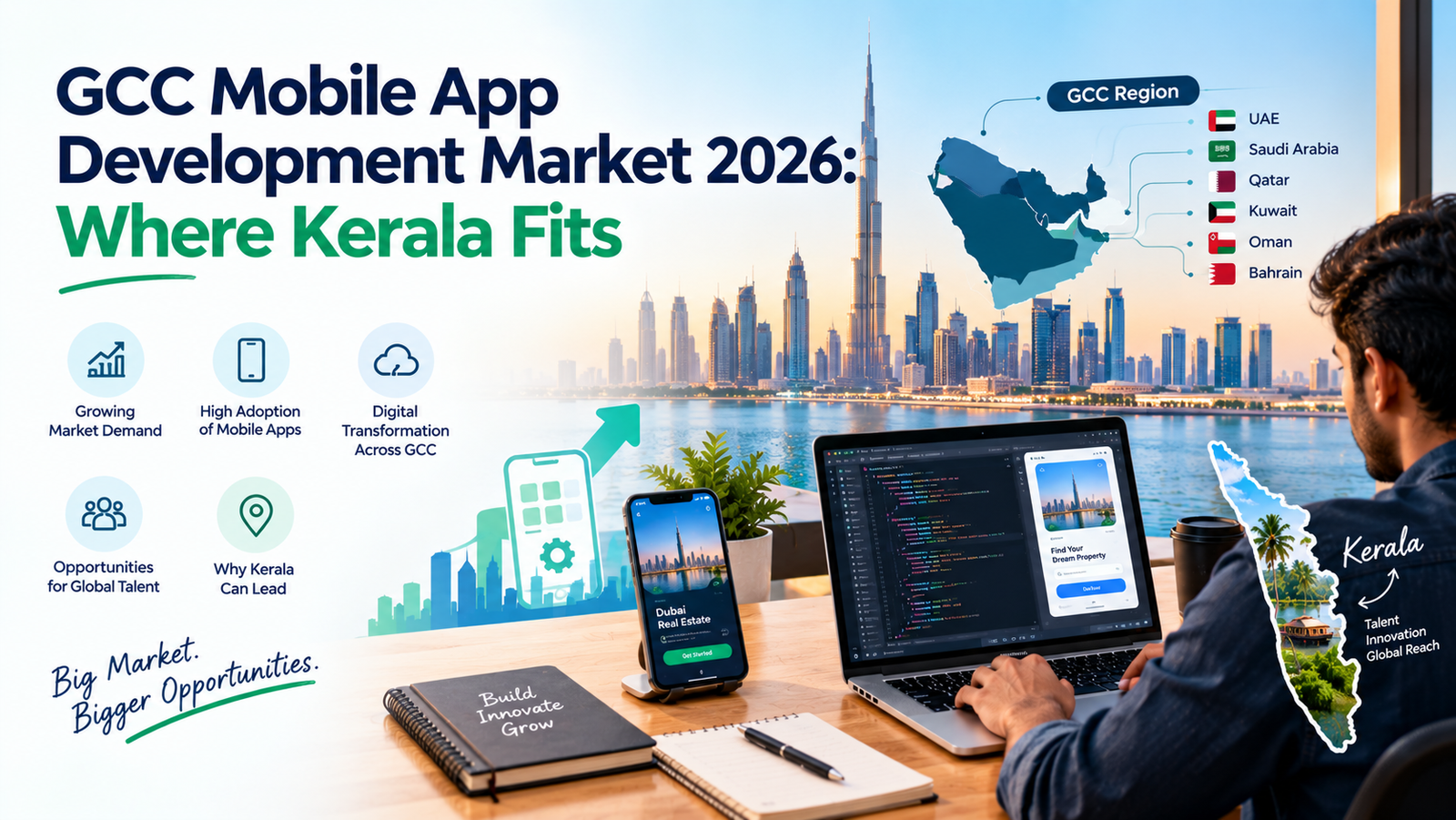
GCC Mobile App Development Market 2026: Where Kerala Fits
Gulf businesses are moving payments, services and shopping onto the phone. See where GCC mobile app demand is heading in 2026, what buyers expect, and why Kerala teams are winning Gulf projects on cost and time-zone overlap.