

Custom Software Development for GCC Startups: Why Kerala Wins
Discover why Kerala is becoming the go-to outsourcing hub for GCC startups needing custom software development — cost, talent, and time-zone advantages explained.
Custom Software Development for GCC Startups: Why Kerala Is Becoming a Preferred Outsourcing Hub
Every founder building a startup in Dubai, Riyadh, Doha, or Abu Dhabi eventually hits the same wall: great product idea, tight runway, and a local tech-talent market where good engineers are either extremely expensive or already committed to enterprise contracts. Hiring an in-house development team in the GCC is slow and costly. Going fully offshore to Eastern Europe or the US comes with steep rates and time-zone friction. Somewhere in between, a quieter option has been steadily gaining ground — Kerala.
Over the last few years, Kerala has moved from being a talent-export state (sending engineers abroad) to becoming a genuine software delivery hub in its own right. For GCC startups specifically, that shift matters more than most people realize. This article breaks down exactly why.
The GCC Startup Software Problem
Before looking at Kerala's advantages, it's worth being honest about what GCC founders are actually dealing with:
Local dev talent is expensive and scarce. Riyadh and Dubai salaries for experienced full-stack engineers routinely run 2-3x what the same skill level costs elsewhere, and demand from well-funded startups and enterprises keeps that pressure high. Freelance platforms are inconsistent. Individual freelancers can be excellent for small tasks but rarely provide the process discipline, documentation, and continuity a real product needs past MVP stage. Western outsourcing partners are costly and distant. US and UK dev shops charge premium rates, and the multi-hour time-zone gap slows every feedback loop to a crawl. Fully offshore options (Eastern Europe, Southeast Asia) often mean zero overlap hours, communication friction, and cultural/context gaps that are easy to underestimate until a sprint goes sideways.
What most early-stage GCC startups actually need is a partner that combines strong engineering with cost discipline, real-time communication, and enough cultural and business familiarity to move fast without constant hand-holding. That's precisely the gap Kerala has been filling.
1. A Genuinely Deep Engineering Talent Pool
Kerala has one of India's highest literacy rates and a long-standing culture of prioritizing technical and engineering education. The state produces a large annual pipeline of computer science and IT graduates from established engineering colleges, on top of a mature ecosystem of coding bootcamps and private training institutes.
What sets this pool apart isn't just volume — it's specialization. Kerala's tech workforce has matured well beyond basic web development into full-stack engineering, mobile app development, cloud architecture, and increasingly, AI and automation work. For a GCC startup that needs more than a template website — think a booking platform with real-time inventory, a fintech dashboard, or an AI-driven customer support tool — that depth matters far more than headcount alone.
2. Cost Efficiency Without the Quality Trade-off
This is usually the first thing GCC founders ask about, and understandably so — runway is everything at the startup stage.
Kerala-based development teams typically operate at a fraction of GCC or Western hourly/project rates, driven by a lower cost of living and operating overhead relative to Dubai, Riyadh, or European tech hubs. Crucially, this isn't the "cheap and unreliable" outsourcing stereotype from a decade ago. Kerala's better development agencies run structured, milestone-based processes — the same discipline you'd expect from a premium Western shop, just without the premium Western price tag.
For a detailed breakdown of what custom software projects typically cost when built by a Kerala-based team, our guide on ecommerce website development costs for GCC sellers is a useful reference point, even for teams building beyond ecommerce specifically — the cost logic (labour rates, infrastructure overhead, project complexity) carries across most custom software categories.
3. Time-Zone Overlap That Actually Works
This is the advantage most people underestimate until they've lived without it.
Kerala (IST, UTC+5:30) sits roughly 1.5–2.5 hours ahead of GCC time zones (UAE and Oman at UTC+4, Saudi Arabia and Qatar at UTC+3). In practice, that means a Kerala-based dev team's working day overlaps substantially with a Dubai or Riyadh founder's working day — real-time standups, same-day Slack responses, and sprint reviews that don't require anyone to join a call at midnight.
Compare that to outsourcing partners in Eastern Europe (3–5 hour gaps with early GCC risk) or Southeast Asia/the Philippines (2–3 hour gaps but often misaligned working-hour cultures), and Kerala's overlap becomes a genuine operational advantage — not just a nice-to-have. Faster feedback loops mean faster iteration, which matters enormously when a startup is still finding product-market fit.
4. Cultural and Business Familiarity With the GCC
Kerala has one of the largest Non-Resident Indian (NRI) populations working across the UAE, Saudi Arabia, Qatar, Oman, Bahrain, and Kuwait — a relationship that goes back decades. This isn't a minor detail; it shapes how Kerala-based businesses operate.
Malayali professionals across the Gulf have built deep familiarity with GCC business norms, communication styles, and regulatory context — familiarity that gets carried back into the Kerala tech ecosystem through returning professionals, cross-border teams, and long-standing family and business ties. For a GCC founder, working with a Kerala-based development partner often means far less "explaining the market" than working with a team based somewhere with no GCC exposure at all.
Our post on hiring a digital marketing agency in Kerala vs the UAE covers this dynamic in more depth from the marketing-services angle, but the same underlying logic applies directly to software development partnerships.
5. English Proficiency and Communication Quality
Kerala consistently ranks among India's most English-proficient states, a legacy of its education system and long history of overseas employment. For technical collaboration — writing specs, running sprint calls, reviewing pull requests, handling support tickets — clear English communication removes a friction point that trips up outsourcing relationships more often than people expect.
This matters just as much for non-technical founders as for technical ones. A founder without a CTO background needs a development partner who can translate business requirements into technical decisions clearly, in plain language, without losing anything in translation — literal or otherwise.
6. A Maturing Local Tech Ecosystem
Kerala's IT sector has grown well beyond isolated freelancers and small shops. Technology parks like Technopark (Thiruvananthapuram), Infopark (Kochi), and Cyberpark (Kozhikode/Malappuram) have anchored a genuine startup and services ecosystem, backed by state government IT policy support aimed specifically at growing the sector.
That ecosystem produces a layer of established development agencies — not just individual contractors — capable of handling custom software development end to end: architecture planning, custom website and platform builds, mobile app development, and ongoing maintenance, all under one roof rather than stitched together across freelancers.
For GCC startups specifically, working with an established agency rather than a solo freelancer or informal team reduces a real risk — continuity. Freelancers move on to other projects; agencies build institutional processes designed to outlast any single developer's availability.
Considering a Kerala-based development partner for your GCC startup? Message our team on WhatsApp to discuss your project scope and get a straightforward cost and timeline estimate.
7. Full-Cycle Delivery, Not Just Coding
One thing that separates a strong outsourcing partner from a basic dev-for-hire arrangement is scope. Startups rarely need "just code" — they need requirements gathering, UX thinking, QA, deployment, and post-launch support, all coordinated rather than handled as disconnected line items.
Kerala-based agencies with mature processes typically offer this full-cycle model: discovery and architecture planning, design, development, testing, deployment, and ongoing maintenance and support after launch. For a GCC startup managing a lean internal team, this full-cycle coverage often matters more than any single technical capability — it means the founder isn't left coordinating between five different vendors for one product.
8. Lower Risk Than It Used to Be
Outsourcing to India carries some old baggage — stories of missed deadlines, poor communication, and low-quality output from a decade or more ago. It's a fair concern to raise, but it's increasingly out of date, particularly for agencies operating out of Kerala's more established tech hubs.
The practical way to de-risk this as a founder is straightforward: look for agencies with a visible portfolio of completed, verifiable projects, milestone-based contracts rather than vague open-ended engagements, and a communication cadence (weekly syncs, shared project boards, clear escalation paths) that mirrors what you'd expect from any professional vendor relationship, anywhere in the world.
Is Kerala the Right Fit for Every GCC Startup?
Not automatically — it depends on what you're building and how you want to work.
Kerala tends to be an especially strong fit for:
Early- to growth-stage startups that are cost-conscious but still need production-grade engineering, not just an MVP shortcut Founders who want real-time or near-real-time collaboration rather than async-only, multi-day-gap outsourcing Businesses with any existing GCC-Kerala/Malayali community connection, where trust and cultural fluency are already partially established Products that need full-cycle development — design through deployment through maintenance — under one accountable team
It's a weaker fit for teams that specifically need an in-person, same-city development team for regulatory, security-clearance, or on-site reasons — though even in those cases, a hybrid model (local liaison plus Kerala-based development) is often workable.
Getting Started: What to Look For in a Kerala-Based Partner
If you're evaluating outsourcing partners in Kerala, a few practical checks go a long way:
Ask for a real, verifiable portfolio — not just logos, but actual case studies with outcomes. Confirm working-hours overlap explicitly. Don't assume it; ask what hours the team is actually available for live calls with your time zone. Clarify the full-cycle scope up front — design, development, QA, deployment, and post-launch support should all be defined, not implied. Check communication tooling and cadence. Weekly syncs, shared project management boards, and a named point of contact are good signs of process maturity. Start with a smaller, well-scoped project before committing to a large build, to evaluate fit before the stakes get high.
Kerala's rise as a GCC outsourcing hub isn't an accident — it's the product of a deep engineering talent base, meaningful cost advantages, workable time-zone overlap, and decades of Gulf-Kerala business familiarity all converging at once. For GCC founders weighing where to build their product, it's a combination that's increasingly hard to match elsewhere.
Frequently Asked Questions
Keep Reading
View All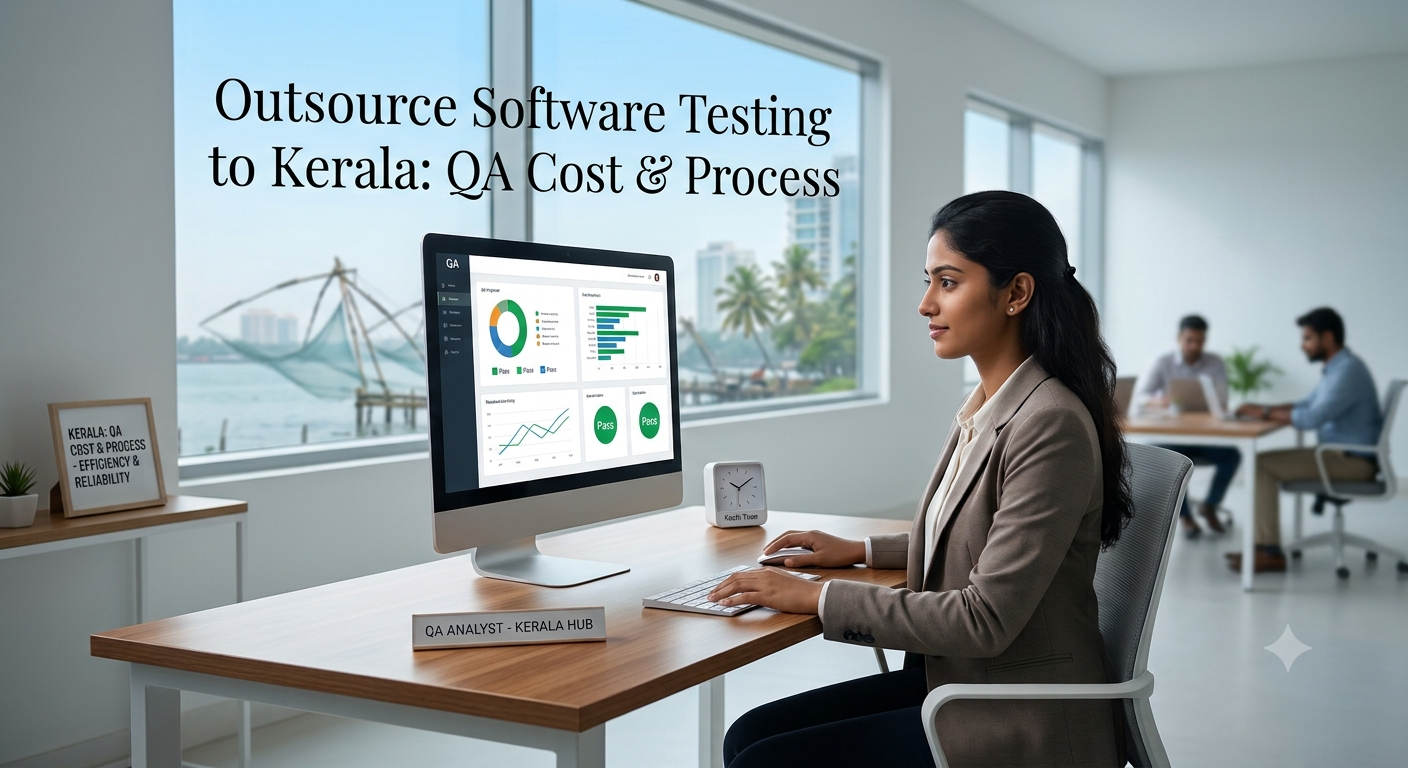
Outsource Software Testing to Kerala: QA Cost & Process
Planning to outsource QA? See what manual and automation testing cost in Kerala, how the process works, and which questions to ask vendors before you sign.
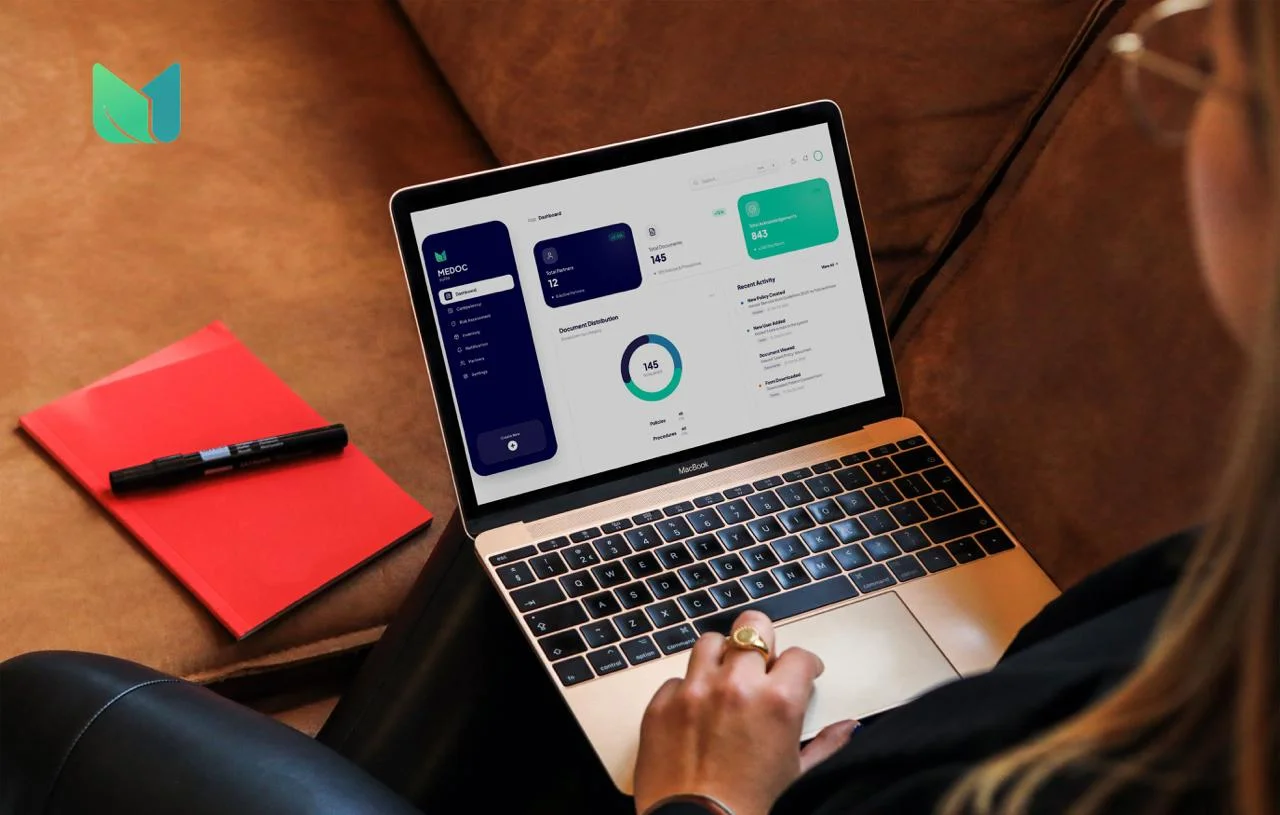
Case Study: Medoc Suite Platform by CODO AI
Scattered records, tricky scheduling and slow billing cost healthcare teams hours every week. See how CODO AI approached Medoc Suite, from discovery to launch, and what a single healthcare platform can change for your clinic.
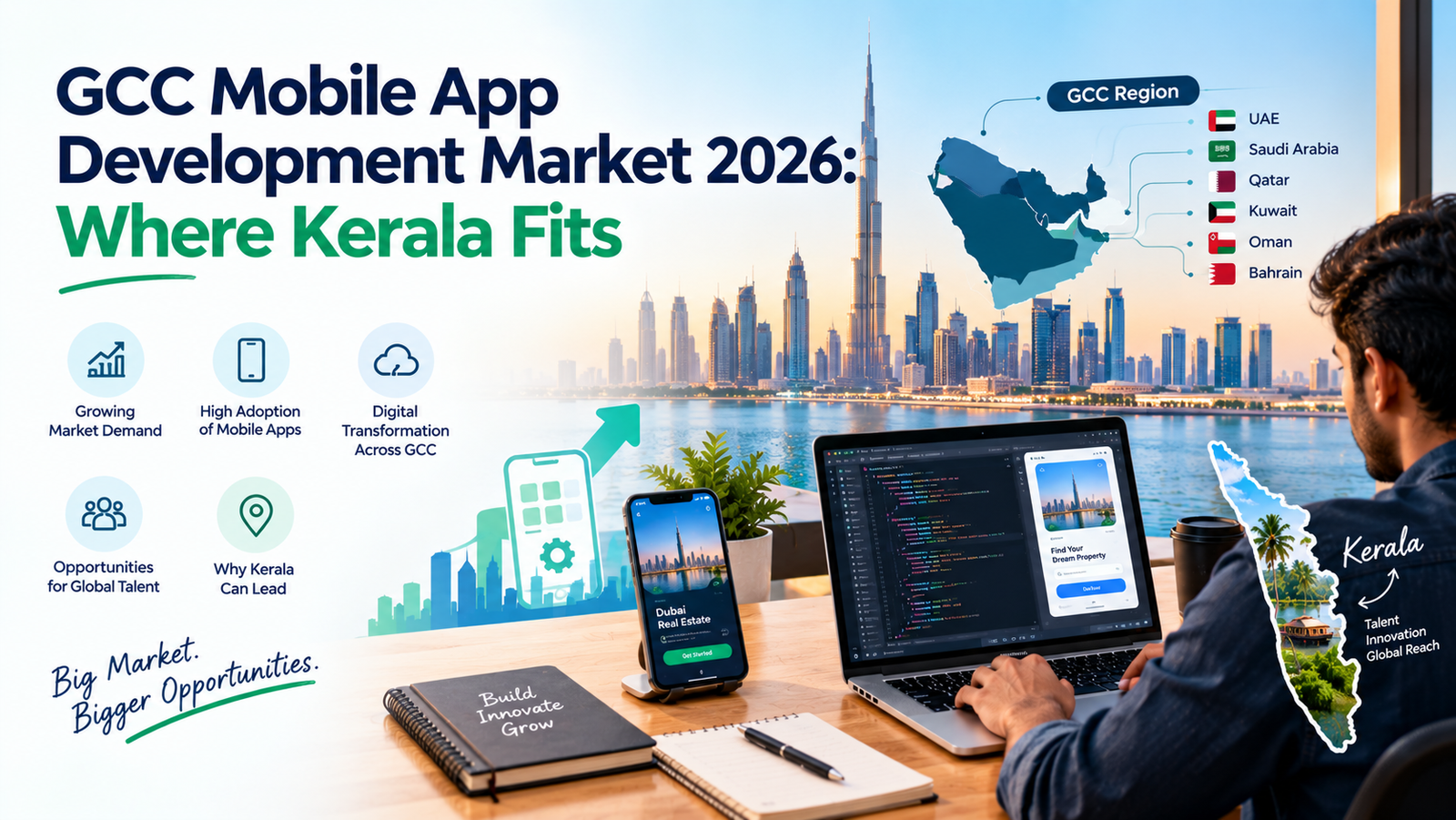
GCC Mobile App Development Market 2026: Where Kerala Fits
Gulf businesses are moving payments, services and shopping onto the phone. See where GCC mobile app demand is heading in 2026, what buyers expect, and why Kerala teams are winning Gulf projects on cost and time-zone overlap.