

Website Redesign Cost in Kerala: GCC Business Budget Guide
Planning a website redesign for your GCC business? See what drives the cost — content migration, new features, SEO — plus a free audit before you budget.
If your business website was built four or five years ago, it's probably still "working" — it loads, it lists your services, people can find your contact number. But working and performing are two different things. For Gulf-based Malayali business owners who built a site early on and haven't touched it since, the real question isn't whether the site needs a redesign. It's usually what a proper redesign will actually cost, and where that money goes.
This guide breaks down realistic redesign budgets for 2026, what actually drives the cost up or down, and the mistakes that turn a routine refresh into an expensive redo.
Signs Your Existing Site Needs a Redesign — Not Just an Update
A redesign is a bigger commitment than a quick content edit, so it's worth being clear about when you actually need one. The usual signals:
It doesn't reflect your current business. Services you've added in the last two or three years aren't listed. Old branding, old team photos, old pricing still sit on the live site. It's slow, especially on mobile. If your site takes more than 3-4 seconds to load on a phone in Dubai or Riyadh, you're losing visitors before they see anything — and Google is quietly penalizing you for it in search rankings. It's not built for a GCC audience. No Arabic or multilingual option where your customer base needs one, no WhatsApp contact button, no clarity on whether you ship to or serve customers in the Gulf specifically. The CMS is outdated or unsupported. Old WordPress themes, deprecated plugins, or a custom-coded site nobody can safely edit anymore are all redesign triggers, not maintenance fixes. Conversions have flatlined. Traffic is stable but enquiries aren't — often a sign the site's structure or calls-to-action haven't kept pace with how people actually browse and decide today. You're ashamed to send the link. If you hesitate before sharing your own website with a prospective client, that hesitation is the clearest signal of all.
If two or three of these sound familiar, you're not looking at a content update — you're looking at a redesign. The next question is what that actually costs.
What Actually Drives Website Redesign Cost
Redesign pricing varies more than new-build pricing, because so much depends on the state of what's already there. These are the factors that move the number most:
-
Content migration. How much existing content — pages, blog posts, product listings, images — needs to move to the new site, and in what condition. A clean migration from a well-organized CMS is fast. Migrating from an old static HTML site, or one with years of unstructured content, takes considerably longer and costs more.
-
New features. This is usually the single biggest cost driver. Adding a booking system, a multi-language toggle, a payment gateway, a customer portal, or WhatsApp-based enquiry automation on top of a basic redesign can double the scope. It's worth listing every feature you actually want before getting a quote, because features added mid-project cost more than features scoped upfront.
-
Design complexity. A template-based visual refresh with your existing structure kept intact costs far less than a full custom design built from scratch, with new page layouts, custom graphics, and a rebuilt information architecture.
-
Number of pages. A 6-page service site and a 40-page site with a blog, resources section, and multiple service sub-pages are simply different projects, even with identical design complexity per page.
-
SEO and redirect mapping. This is the step businesses most often skip — and regret. A redesign that changes URLs without proper 301 redirects can wipe out years of accumulated search rankings within weeks. Proper SEO migration (URL mapping, redirect rules, metadata carry-over, schema markup) should always be budgeted as a line item, not an afterthought.
-
Platform change. If you're moving from one CMS to another — say, an old custom build to WordPress, or WordPress to a headless setup — that's more work than redesigning within your current platform, but it can be worth it if your current CMS is the actual bottleneck.
-
Integrations. CRM connections, email marketing tools, live chat, analytics, and third-party APIs each add setup and testing time, particularly if you're connecting Gulf-specific payment gateways or region-specific tools alongside Indian ones.
Illustrative Redesign Budget Bands (India, 2026)
The ranges below are indicative planning figures based on current market rates for Indian web design and development work — not a fixed rate card. Your actual quote depends on the scope factors above; treat this as a starting point for budgeting conversations, not a final price.
Data Summary & Overview
| Redesign Type | What's Typically Included | Approx. Budget Range |
|---|---|---|
| Visual Refresh | Existing structure kept, new design/theme applied, mobile optimization, basic on-page SEO carry-over | ₹40,000 – ₹1,00,000 |
| Standard Redesign | New design + restructured pages, content migration, CMS cleanup, redirect mapping, 1-2 new features | ₹1,00,000 – ₹2,50,000 |
| Full Rebuild | Complete redesign, platform change if needed, multiple new features (booking/payments/multilingual), full SEO migration, custom integrations | ₹2,50,000 – ₹6,00,000+ |
Businesses serving GCC customers specifically — with multilingual needs, Gulf payment gateways, or WhatsApp Business API integration — tend to land in the Standard-to-Full range rather than a basic Visual Refresh, simply because the feature list is longer from the start.
Redesign vs. Rebuild vs. Refresh: How to Decide
Not every aging site needs to be torn down and rebuilt. A quick way to think about it:
Refresh if the structure and content are fundamentally sound, but the visual design feels dated and mobile performance needs work. Redesign if the structure needs rethinking — pages are in the wrong place, navigation confuses visitors, or the site doesn't represent your current service list. Rebuild if you're changing CMS platforms, adding fundamentally new functionality (ecommerce, booking, customer accounts), or the current site's technical foundation is actively limiting growth.
Getting this categorization wrong in either direction is expensive: over-scoping a simple refresh into a full rebuild wastes budget, while under-scoping a rebuild as a refresh means paying for a second project within a year.
Timeline: What to Expect
Standard business website redesigns typically run 3-6 weeks from kickoff to launch, once content and feature requirements are finalized. Full rebuilds with custom features, multilingual content, or platform migration can run 6-12 weeks. The biggest timeline risk isn't development — it's content readiness. Projects stall most often because updated copy, images, or product data aren't ready when the design phase needs them, so having your content organized before kickoff is the single best way to keep a redesign on schedule.
The Most Expensive Redesign Mistake: Losing Your SEO Rankings
This deserves its own section because it's the most common — and most avoidable — redesign failure we see. A business redesigns its site, the new version looks great, and three weeks later organic traffic has dropped 40-60%. Almost always, the cause is the same: URLs changed without proper 301 redirects, so Google's index of the old pages simply goes dead, taking years of ranking history with it.
A proper SEO migration plan — mapping every old URL to its new equivalent, setting up redirects before launch (not after), preserving metadata and structured data, and monitoring Search Console closely for the first month post-launch — should be a non-negotiable line item in any redesign scope, not something bolted on if there's budget left over. If an agency's redesign quote doesn't explicitly mention redirect mapping, ask about it before signing off.
Why a Kerala-Based Team Works Well for This
For GCC business owners specifically, redesign work is one of the easiest categories to outsource well, because it doesn't require daily in-person coordination — most of the discovery, design review, and feedback cycles happen over calls and shared documents regardless of where the agency is based. A Kerala-based team gives you IST working hours that overlap comfortably with GST and AST business hours, English-first communication, and development costs that are typically 40-60% lower than equivalent US or UK agency pricing for the same scope, without a quality trade-off on the actual build. If you're already running a business in the Gulf and thinking about where to source a redesign, the cost gap alone is usually worth investigating before committing to a local agency quote.
Get a Free Website Audit Before You Budget
Before committing to a redesign budget in either direction, it's worth knowing exactly what your current site needs and what it doesn't. Get in touch for a free website audit — we'll review your existing site's structure, performance, mobile experience, and SEO health, and tell you honestly whether you need a full redesign, a lighter refresh, or just a handful of fixes. It's a faster way to right-size your budget than starting from a generic quote.
Request your free website audit and get a clear, honest answer on what your redesign actually needs — before you commit to a budget.
Frequently Asked Questions
Keep Reading
View All
Outsource Software Testing to Kerala: QA Cost & Process
Planning to outsource QA? See what manual and automation testing cost in Kerala, how the process works, and which questions to ask vendors before you sign.
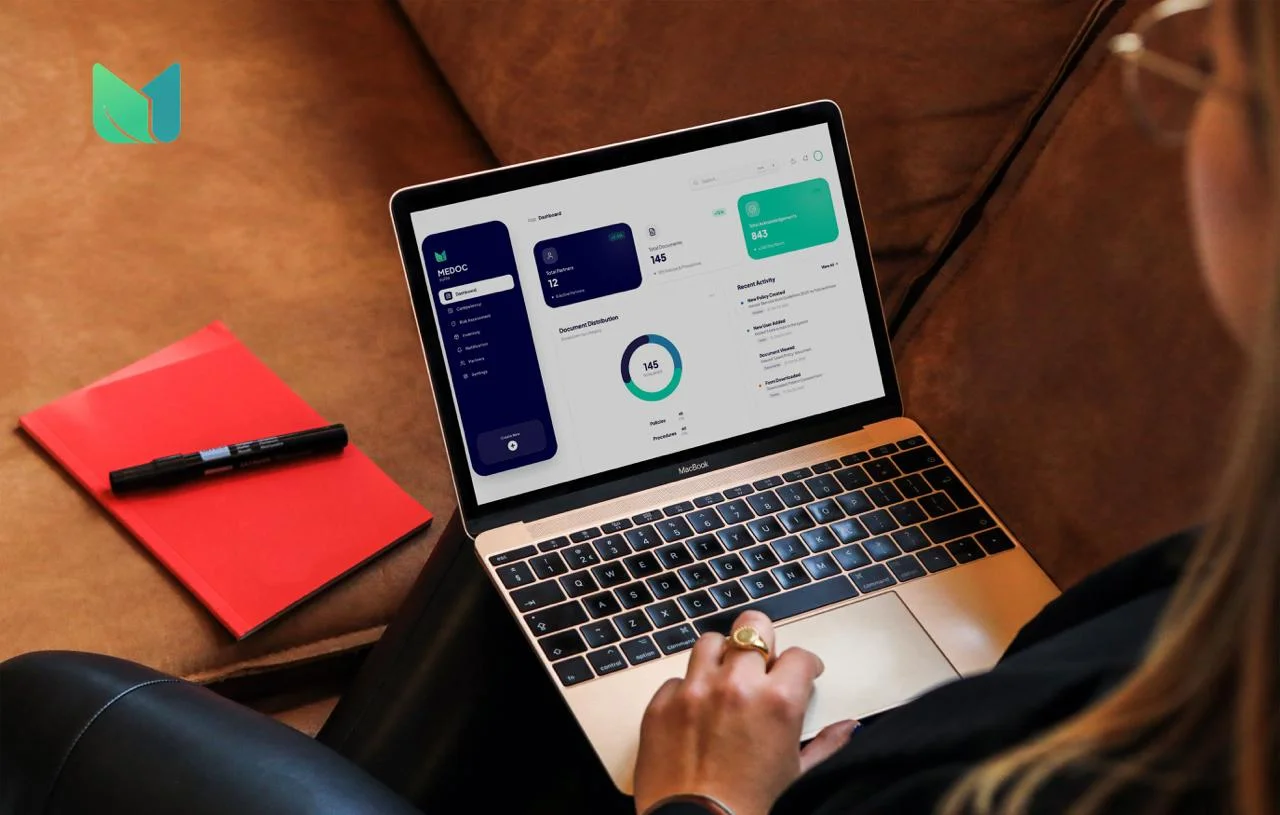
Case Study: Medoc Suite Platform by CODO AI
Scattered records, tricky scheduling and slow billing cost healthcare teams hours every week. See how CODO AI approached Medoc Suite, from discovery to launch, and what a single healthcare platform can change for your clinic.

GCC Mobile App Development Market 2026: Where Kerala Fits
Gulf businesses are moving payments, services and shopping onto the phone. See where GCC mobile app demand is heading in 2026, what buyers expect, and why Kerala teams are winning Gulf projects on cost and time-zone overlap.