

Ecommerce Website Development Cost in Kerala for GCC Sellers (2026)
What ecommerce website development actually costs when hiring a Kerala team as a GCC-based seller — pricing ranges, cost factors, and what drives the final quote.
Ecommerce Website Development Cost in Kerala for GCC Sellers: 2026 Pricing Guide
A seller based in Dubai, Doha, Riyadh, or Muscat searching for ecommerce website costs runs into a frustrating pattern almost immediately: every price quoted online is in rupees, benchmarked against Indian domestic sellers, and silent on the specific things a GCC business actually needs — Arabic-English bilingual product pages, AED/QAR/SAR pricing display, regional payment gateways, and shipping logic that spans India-based fulfilment to Gulf delivery. None of that is covered by a generic "ecommerce website cost in India" article.
This guide breaks down what ecommerce website development genuinely costs when a GCC-based seller hires a Kerala development team in 2026 — not a single number, but the real cost drivers, realistic price bands for different store types, and what separates a quote that looks cheap from one that's actually complete.
If you're earlier in the decision process and want the broader how-to picture first, our guide to building an ecommerce website in Kerala covers the process end to end. This post focuses specifically on cost.
Why GCC-Specific Pricing Looks Different From Standard India Quotes
A Kerala agency quoting a domestic Indian client and a GCC-based seller for what looks like "the same store" often arrives at meaningfully different numbers, because the actual scope isn't the same.
Bilingual Arabic-English builds cost more. A properly built right-to-left (RTL) Arabic storefront isn't a translation plugin bolted onto an English template — it needs layout, navigation, and checkout flows genuinely designed to work in both directions. This adds real development time, and any quote that doesn't reflect it usually means the RTL support will be shallow or missing entirely.
Multi-currency display and regional payment gateways add scope. Showing prices in AED, QAR, SAR, or OMR and accepting payment through gateways actually used in the Gulf — rather than only Indian payment rails — requires integration work a purely domestic-focused developer may not have priced in or even encountered before.
Cross-border shipping and tax logic is more complex than a single-country store. A GCC seller shipping from an Indian supplier base, or managing inventory across both India and Gulf warehousing, needs shipping rules, customs documentation triggers, and tax display that a domestic Indian ecommerce build simply doesn't need to handle.
Compliance varies by country. Saudi Arabia in particular has specific e-commerce and content regulations that can affect site structure and required disclosures. A developer without GCC experience may not flag this at all until it becomes a problem post-launch.
Understanding this is the first step to reading any quote correctly — a lower number without these elements priced in isn't a bargain, it's a different, smaller scope than what a GCC seller actually needs.
Realistic Price Bands for 2026
These ranges reflect Kerala-based development pricing for GCC-facing stores, in INR, as a starting reference point — actual quotes should always be itemised against your specific scope.
Basic single-language storefront (₹40,000 – ₹90,000). A functional store built on a platform like Shopify or WooCommerce, English-only, standard payment gateway, template-based design with light customisation, and a modest product catalogue (under 50 SKUs). This suits a seller testing a new market or product line before committing further investment.
Bilingual (Arabic-English) store with regional payment integration (₹1,00,000 – ₹2,50,000). Proper RTL layout, multi-currency display, integration with at least one Gulf-region payment gateway, custom design beyond a stock template, and a larger catalogue with variant and inventory management. This is the realistic middle ground for most established GCC sellers wanting a genuinely usable, on-brand store.
Custom-built, multi-warehouse, high-catalogue platform (₹3,00,000 and above). Fully custom development rather than a templated platform, complex inventory logic across multiple fulfilment locations, advanced automation (order routing, custom reporting, ERP or CRM integration), and design work matched to an established brand identity. This tier suits sellers with meaningful existing volume or specific operational complexity a standard platform can't handle out of the box.
These bands are starting reference points, not fixed prices — the specific factors below shift a quote up or down within and beyond them.
What Actually Drives the Final Number
Platform choice. Shopify and WooCommerce both reduce development time versus a fully custom build, but licensing, app/plugin costs, and hosting differ between them — Shopify's monthly subscription model versus WooCommerce's typically lower recurring cost but higher setup complexity. A fully custom-built platform costs more upfront but avoids ongoing platform fees and gives full control over functionality.
Catalogue size and complexity. A 30-product store and a 3,000-product store with variants (size, colour, material) aren't remotely the same build — product import, filtering, search, and inventory management all scale with catalogue complexity.
Design customisation level. A store using a proven template with brand colours and logo applied costs meaningfully less than a fully custom-designed storefront built around specific brand guidelines and unique layout requirements.
Payment gateway integrations. Each additional gateway — a Gulf-region processor alongside an international option like Stripe or PayPal — adds integration and testing time, particularly when currencies and settlement logic differ.
Third-party integrations. Connecting the store to accounting software, an existing CRM, WhatsApp-based order notifications (common for GCC sellers), or inventory systems each adds scope beyond a standalone storefront.
Content and product photography. Whether the agency needs to write product descriptions and source or edit photography, versus receiving finished content ready to upload, materially affects both cost and timeline.
Post-launch support model. A one-time build with no ongoing support costs less upfront but leaves a seller without help when something needs fixing. A retainer-based support arrangement costs more overall but matters more for a business actively selling and depending on uptime.
Want an itemised quote for your specific GCC-facing store, not a generic estimate? CODO AI Innovations builds bilingual, multi-currency ecommerce stores for Gulf-based sellers with Kerala-based development pricing. Get in touch for a scope-specific breakdown of exactly what your store needs.
Hidden Costs GCC Sellers Often Miss in Initial Quotes
Domain and hosting, billed separately from development. Some quotes bundle a year of hosting; many don't. Confirm explicitly whether hosting is included, and for how long, before comparing quotes side by side.
SSL certificates and security. Most reputable platforms include this by default now, but it's worth confirming rather than assuming, particularly on lower-cost quotes.
Payment gateway transaction fees. These are ongoing per-transaction costs charged by the payment processor itself, separate from what the development agency charges — and they vary meaningfully between gateways, which matters at volume.
App and plugin subscription costs. On platforms like Shopify, functionality like advanced inventory management, currency conversion, or marketing tools often comes through paid apps with their own monthly fees, stacking on top of the platform subscription itself.
Content translation quality. A cheap machine-translated Arabic storefront reads poorly to native speakers and can actively damage credibility with Gulf customers. Proper translation — human-reviewed, not just auto-translated — is a real cost worth budgeting for separately if it isn't already included.
Post-launch changes beyond the original scope. Almost every project grows slightly once a seller sees the live store and wants adjustments. Understanding the agency's hourly or per-change rate for post-launch tweaks avoids surprise costs.
How to Compare Quotes From Different Kerala Agencies
Request an itemised breakdown, not a single bundled number. A quote that separates design, development, integrations, content, and support makes it possible to compare apples to apples across different agencies — a bundled "package price" often hides what's actually included.
Confirm what "bilingual" actually means in the quote. Ask directly whether RTL Arabic layout is a properly built, tested feature or a lighter translation overlay. This single question separates a genuinely GCC-ready quote from one that only looks like it on paper.
Ask which specific payment gateways are included versus quoted as an add-on. Gulf-region gateway integration is sometimes priced separately from the base quote — worth knowing upfront rather than discovering mid-project.
Clarify ownership and portability. Confirm you'll own the store's domain, hosting account, and underlying platform account, so switching agencies later — if ever needed — doesn't mean rebuilding from scratch.
Compare support terms, not just build cost. A slightly higher quote with a clear, responsive post-launch support structure is often better value than the cheapest build price with no support plan attached.
Our broader guide on choosing a Kerala web design partner for Gulf businesses covers the fuller evaluation checklist beyond pricing alone — worth reading alongside this cost breakdown before committing to a specific agency.
Timeline and Payment Structure: What to Expect
Cost isn't just the final number — how and when it's paid matters for planning, especially across a currency and time-zone gap.
Typical payment structure. Most Kerala agencies work on a milestone basis: an upfront deposit (commonly 40-50%) to begin work, a mid-project payment tied to design approval or a development checkpoint, and a final payment on delivery. Be cautious of any agency asking for full payment upfront before any work has begun — milestone-based payment protects both sides and gives you real leverage if delivery slips.
Realistic timelines by store type. A basic single-language store typically takes 3-4 weeks from kickoff to launch. A bilingual, multi-currency store with custom design and multiple integrations more realistically takes 6-10 weeks. Multi-warehouse or highly custom builds can extend well beyond that, depending on integration complexity. Any quote promising a fully custom bilingual store in under two weeks is worth treating with scepticism — either the scope is smaller than advertised, or quality is being sacrificed for speed.
Currency and exchange rate handling. Since you'll likely be paying in AED, QAR, SAR, or USD against an INR-based quote, clarify upfront whether the quoted price is fixed at the time of the contract or subject to exchange rate movement over the project's duration — this matters more on longer, higher-value builds where the gap between deposit and final payment might span several weeks or months.
Is Kerala Development Still Cost-Effective for GCC Sellers in 2026?
Despite rising Indian IT wages generally, Kerala-based ecommerce development remains meaningfully cheaper than hiring locally in the UAE, Qatar, or Saudi Arabia for comparable scope and quality — the gap has narrowed slightly over recent years but hasn't closed. The cost advantage is strongest for sellers who value direct communication with the actual development team over the lowest possible headline number, since the cheapest available quotes in either market usually mean compromises somewhere — scope, quality, or support.
For a GCC-based seller specifically, the real value isn't just the lower rupee cost — it's finding a Kerala team that has actually built for the Gulf market before, understands the bilingual and payment-gateway requirements without needing them explained from scratch, and prices that understanding into an honest, itemised quote rather than a bundled number that quietly excludes it.
Ready to see what your specific ecommerce store would actually cost? CODO AI Innovations provides transparent, itemised ecommerce development quotes for GCC-based sellers, covering custom website development through to ongoing marketing support once your store is live. Talk to us about your project.
Frequently Asked Questions
Keep Reading
View All
Outsource Software Testing to Kerala: QA Cost & Process
Planning to outsource QA? See what manual and automation testing cost in Kerala, how the process works, and which questions to ask vendors before you sign.
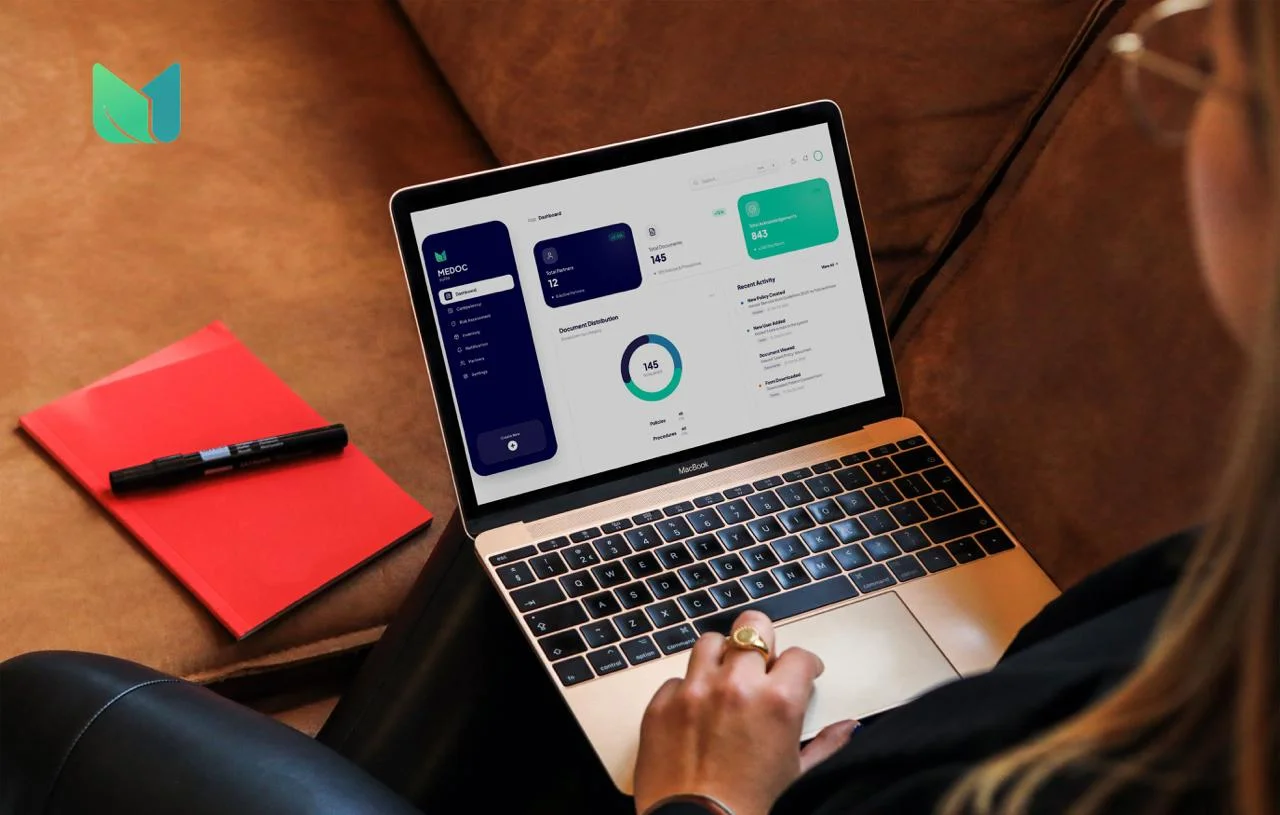
Case Study: Medoc Suite Platform by CODO AI
Scattered records, tricky scheduling and slow billing cost healthcare teams hours every week. See how CODO AI approached Medoc Suite, from discovery to launch, and what a single healthcare platform can change for your clinic.
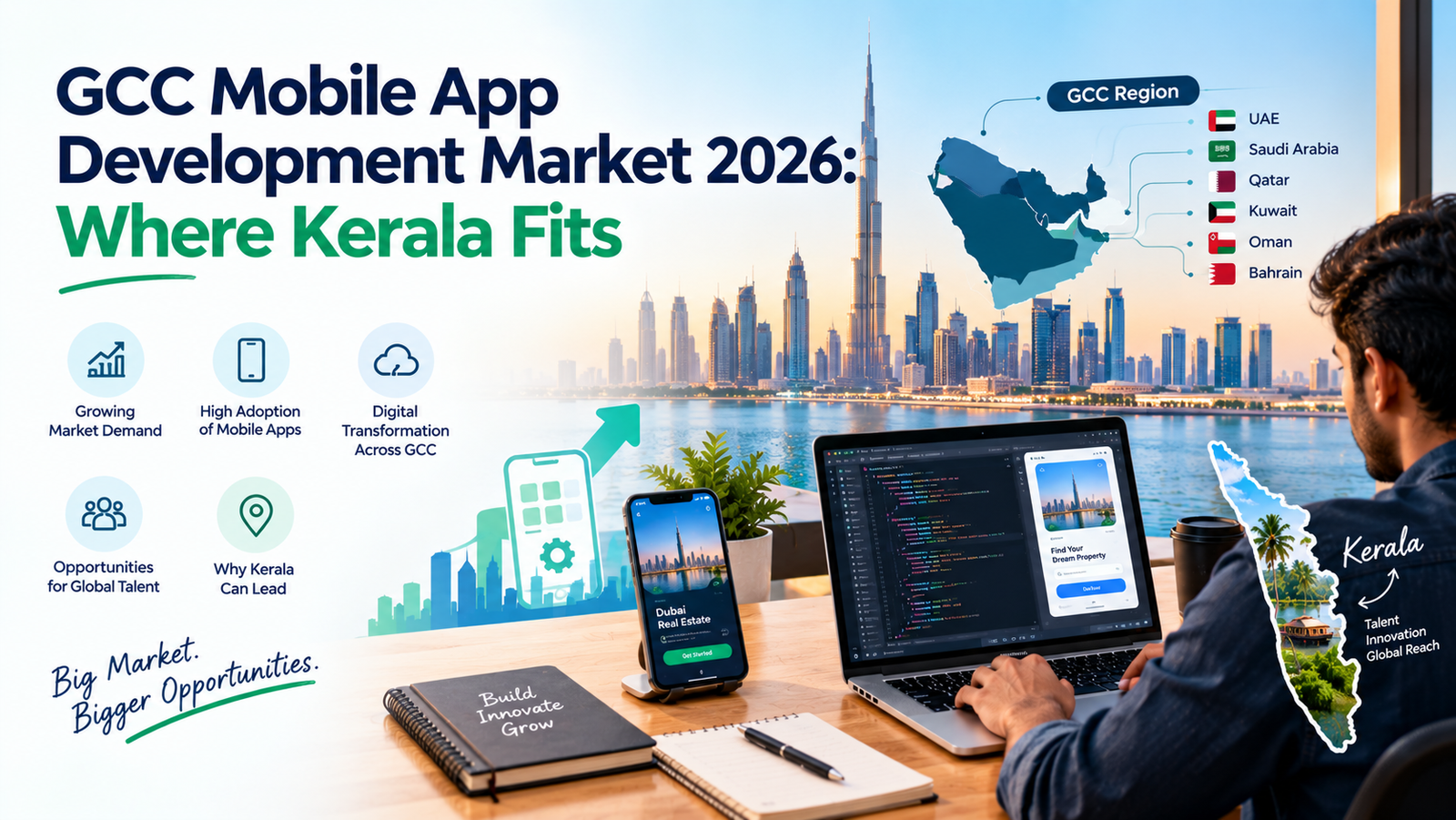
GCC Mobile App Development Market 2026: Where Kerala Fits
Gulf businesses are moving payments, services and shopping onto the phone. See where GCC mobile app demand is heading in 2026, what buyers expect, and why Kerala teams are winning Gulf projects on cost and time-zone overlap.