
Back to Journal
Corporate
31 October 20265 min read
Custom CRM vs Zoho for GCC Small Businesses: Which Wins?
J
Jubairiya KV
SEO Executive
Jubairiya KV
SEO Executive
Should a Gulf SME buy Zoho or build a custom CRM? Compare cost, flexibility, integrations and when a Kerala-built system pays off.
If you run a small business in Dubai, Riyadh or Doha, you have probably reached the point where leads live in WhatsApp chats, customer details sit in three Excel files, and nobody can say with confidence which quotation is still open. A CRM is the obvious fix. The harder question is which kind. The usual shortlist is Zoho CRM, which is affordable and widely used across the Gulf, against a custom CRM built around how your business actually sells. Both can work. They suit different businesses, and choosing wrongly gets expensive in either direction. This guide compares them on cost, flexibility, integrations and ownership, and says plainly when Zoho is the smarter buy and when a Kerala-built custom system pays off.
Choose Zoho if your sales process is fairly standard, your team is under about 15 people, and you want to be running within a few weeks. Choose a custom CRM if your process does not fit a standard pipeline, you depend on WhatsApp, Arabic and English workflows or internal systems the CRM must plug into, or you expect the per-user fees to keep rising as the team grows. Most businesses start with the first and some outgrow it into the second. The rest of this article helps you see which side you are on.
Zoho charges per user, per month, and billing annually is cheaper than paying monthly. Published list prices in US dollars at the time of writing:
| Plan | Annual billing (per user/month) | Monthly billing (per user/month) |
|---|---|---|
| Free (up to 3 users) | $0 | $0 |
| Standard | $14 | $20 |
| Professional | $23 | $35 |
| Enterprise | $40 | $50 |
| Ultimate | $52 | $65 |
Prices in AED, SAR or QAR can differ from the USD list and Zoho adjusts regional pricing from time to time, so check zoho.com/crm/pricing for your country before budgeting. Here is what that means over three years for a 10-person team on annual billing, using list prices only: • Standard: $14 × 10 users × 36 months = $5,040 • Professional: $23 × 10 × 36 = $8,280 • Enterprise: $40 × 10 × 36 = $14,400 Those totals leave out implementation, data migration, training, paid add-ons, extra storage, integrations and VAT. For most small businesses the practical choice is Professional or Enterprise, since automation, custom modules and richer integrations tend to sit in the higher tiers. Confirm the exact feature split on Zoho's own comparison page before you commit.
A custom CRM is a one-time build followed by hosting and support, with no per-user licence fee. The size of the build depends on what you need it to do. As an illustrative reference only, a focused CRM covering leads, pipeline, quotations, follow-up reminders and a management dashboard typically sits in the range of ₹2.5 lakh to ₹8 lakh when built by a Kerala team, with larger systems that add WhatsApp automation, role-based approvals and ERP links costing more. Actual quotes depend on scope, so treat this as a planning band rather than a rate card. After launch, budget for hosting, backups, security updates and small improvements. Our guide to website and software maintenance costs for GCC businesses explains how that retainer is usually structured.
| Factor | Zoho CRM | Custom CRM |
|---|---|---|
| Upfront cost | Low | Higher (one-time build) |
| Running cost | Grows with every user added | Hosting and support, no per-user licence |
| Time to go live | Days to a few weeks | Typically weeks to a few months |
| Fit with your process | You adapt to the tool, within its customisation limits | The tool is built around your process |
| WhatsApp, Arabic/English, local workflows | Possible through add-ons and integrations | Designed in from the start |
| Integrations | Large marketplace of ready-made connectors | Built to your exact systems |
| Data ownership | Stored on Zoho's cloud | Stored where you decide |
| Upgrades and bugs | Handled by Zoho | Handled by your development partner |
| Risk | Price changes, plan limits | Choosing the wrong developer |
Be honest with yourself here. Zoho is the right answer more often than a development company would like to admit.
You do not have to choose forever. A common and sensible approach is to begin on Zoho, then build custom modules or automations on top using its APIs: a WhatsApp follow-up bot, a quotation generator, a dashboard for management. If those add-ons grow until the CRM is mostly custom, you can plan a proper migration later, with real usage data to design from. This is also where AI-based automation helps most, such as drafting follow-ups, tagging enquiries and flagging deals that have gone quiet, without replacing the CRM itself.
For Gulf SMEs, the barrier to custom software has usually been price. A Kerala-based team changes that equation because development costs are lower, while working hours overlap comfortably with the Gulf. Many Kerala developers also understand the Malayali-owned businesses they serve, from trading and retail to clinics and logistics. We explain the economics in more detail in our piece on custom software development for GCC startups and the Kerala outsourcing hub. The trade-off is distance. Choose a partner with a clear process, written scope, regular demos and a named person you can call. Our guide to choosing a reliable web development partner in Kerala when you are in the Gulf covers what to check before you sign. If you want to see the kind of systems we build, browse our portfolio, or read about our custom software development service.
Answer these six questions honestly:

What schools, coaching centres and training institutes need on their website: admissions flow, course pages, results and lead capture.
How CODO AI built the G7 Holdings website: the brief, the design decisions, the build and what changed for the business.
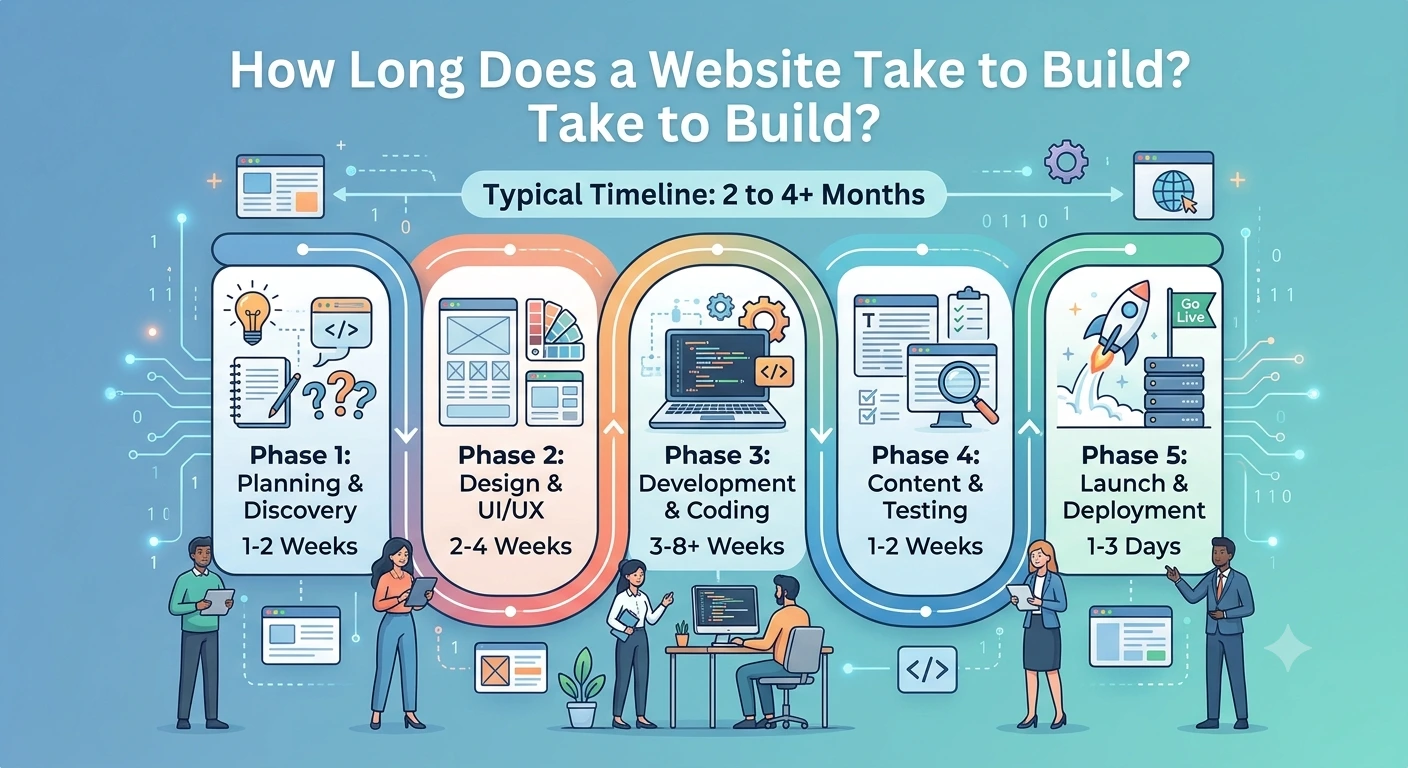
From brief to launch: realistic website build timelines for GCC businesses by site type, plus what delays projects and how to avoid them.